Many ATR-X kiddos have feeding tubes of one kind or another. Ryan doesn’t have a feeding tube but packing all his extra supplies when we travel is bad enough. Shout out to all the families who have become logistical ninjas, traveling with a tubie!

Many ATR-X kiddos have feeding tubes of one kind or another. Ryan doesn’t have a feeding tube but packing all his extra supplies when we travel is bad enough. Shout out to all the families who have become logistical ninjas, traveling with a tubie!
It took me 11 months to come to terms with Ryan’s diagnosis. And while it’s pretty awful, we can move forward or we can crumble. Let’s do the best we can.

When our first vision therapist came to us from the wonderful Visually Impaired Preschool Services of Indianapolis, she brought with her this amazing DIY hanging rack so Ryan could sit or lay under it and look at the objects. And one day he finally started reaching for the things! Anyone can make this cheaply out of PVC pipe. Ours is 1/2″ diameter and 24″ long on top and 26″ long on each side. We added the foam around the edges for when he would fall over onto the frame, though now he sits in a chair in front of the frame.
We switch out the toys as he gets sick of them but consistent favorites have always been a water bottle filled with popcorn and covered with the green mop slippers and the bell bracelet. Jar lid rings are also a hit given their shininess and auditory feedback and Ryan really loves to grab the gold cat toy as well. Slinkies are also a great thing to hang. We’ve added more items as his vision has grown stronger.
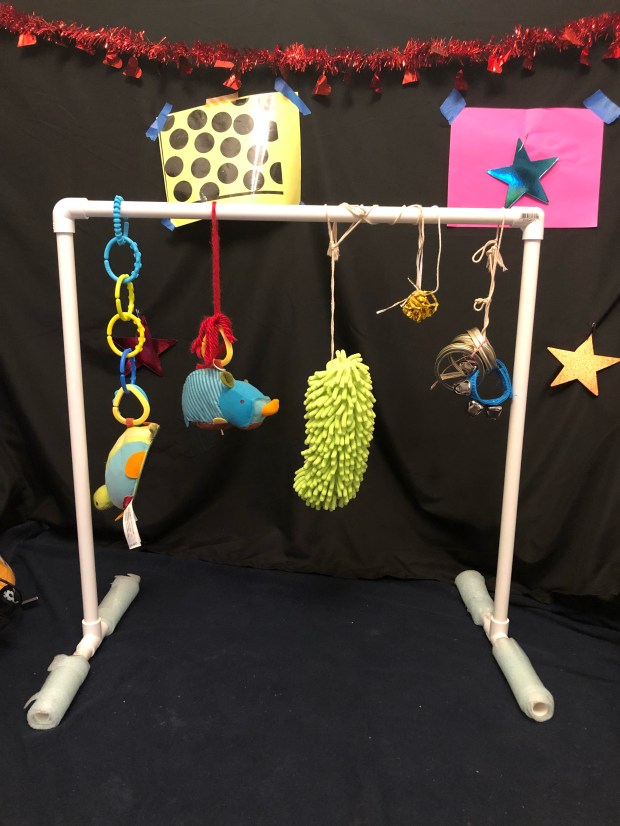
Hanging Toy Frame (against Ryan’s play corner with black sheet/garland, etc)
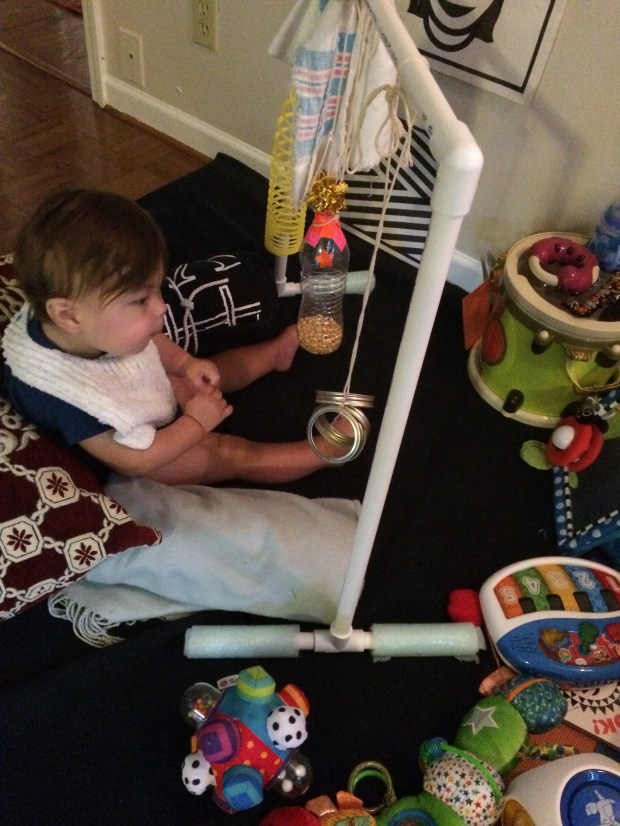
When Ryan first received this, he would sit and look at the toys. Then eventually he started reaching for them. Now he plays with them voraciously.
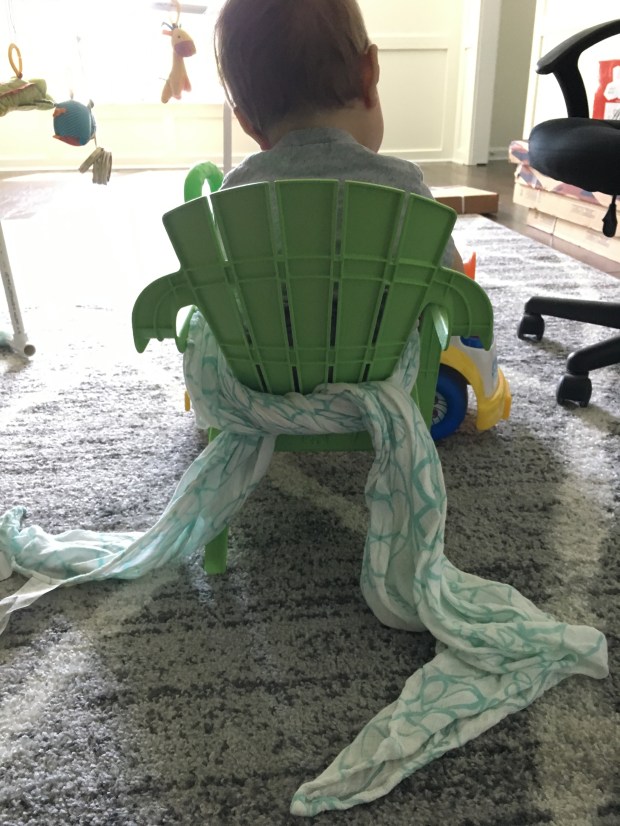
Once Ryan got a little bigger, we got this little chair for him to sit in and reach forward to play with his hanging toys. We put shelf liner on the bottom of it so he doesn’t scoot down and slip out of the chair, and we tie a swaddle blanket around his waist and the chair as a seat belt of sorts to keep him there safely.
You may also notice the black sheet up in Ryan’s play area, and the black blanket on the ground, plus the high contract patterns and shiny garland. We try to cut down on the visual clutter as much as possible to help his brain focus as well as give him strong points of interest to focus on (garland/shiny stars, etc; Party City is the best for this stuff). Looking at objects against a black background is also thought to be helpful, hence the blanket. Cutting down visual clutter is incredibly important for kids with Cortical Visual Impairment which affects many kids with ATR-X. If you think your kiddo might have CVI, I’ve found these sites to be helpful for tips on improving Ryan’s ability to focus visually:
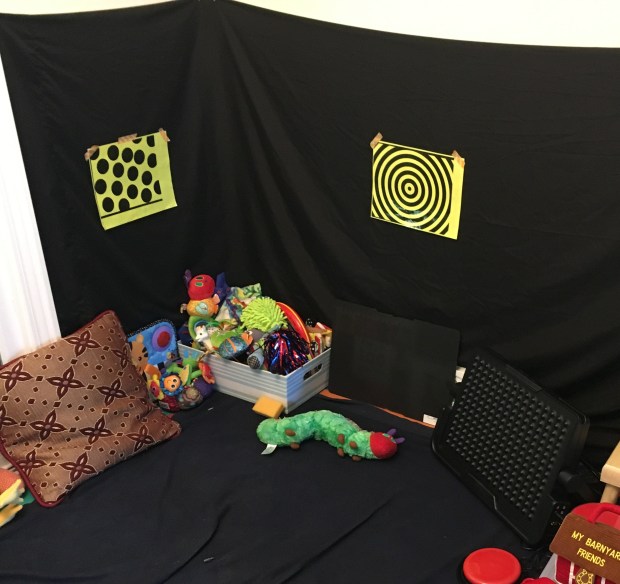
The box of toys has been moved and other toys are hidden behind the sheet now to make his play area as de-cluttered as possible.
There are lots of great suggestions online for adapting things in your home for your child with cortical visual impairment or CVI, to help the brain better be able to focus on an object or environment. Here are some of my favorite ideas, both involving a Sharpie:
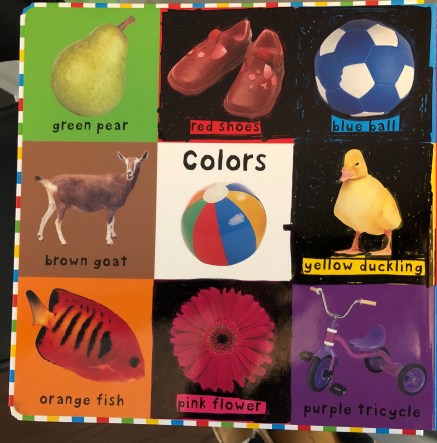
1. Black out the background on busy pages in books to reduce the complexity of what your child is looking at and help your child “see” the main objects on these pages. I’ve had luck with some books but not with others that have super shiny/slick pages as the market doesn’t stick.
See how hard the purple bicycle or green pear are to see below, when against their like-colored backgrounds? That’s tough for a kid with CVI. The slick finish of these pages wasn’t the best for my Sharpie but would be easy to cover with black construction or contact paper, if you’re somewhat crafty (which, to be honest, I am not).
Here’s another example from another CVI mom:
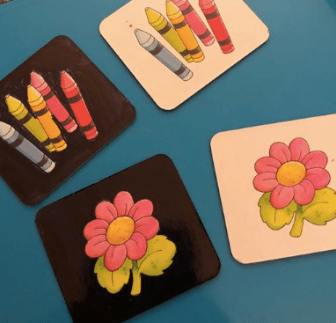
2. Trace the objects on the pages so they have a black frame around them, which will help your child “see” them. (I also think many of these Jellycat books are great for CVI kids, given the simplicity of the pages).


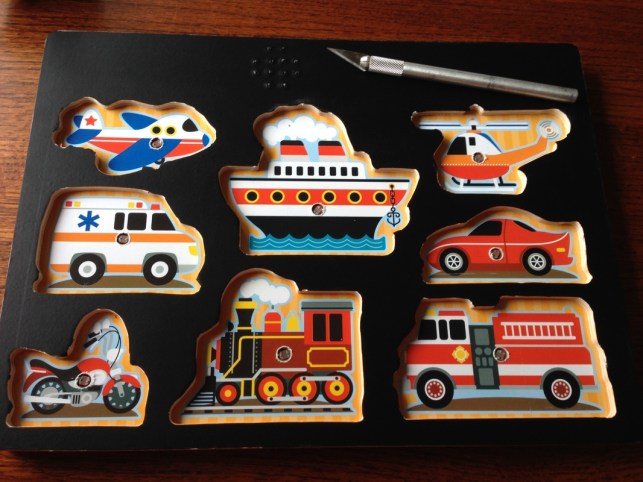
3. Black out the background on wooden puzzles to help your child “see”the pieces to grab. You can use a Sharpie if the material allows or get fancy and use black shelf paper and an exacto knife, as shown in this blog post from Making Our Way In a Typical World.
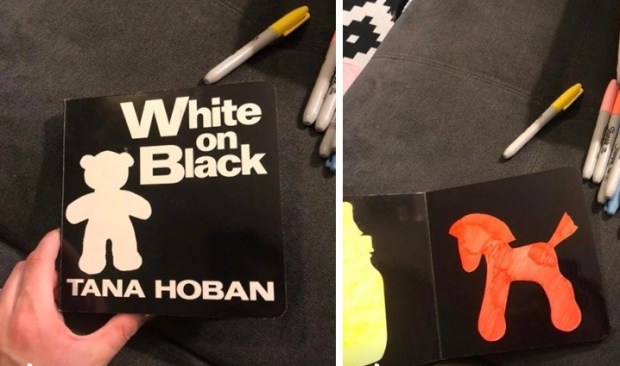
4. Color in the pages with the colors that interest your child. Black & White books are great, and are the first books that ever grabbed my kiddo’s attention. Take colored Sharpies and color in the white parts of these pages with the color that appeals most to your child.
Find more great ideas for your kid via the CVI Awareness Facebook group.
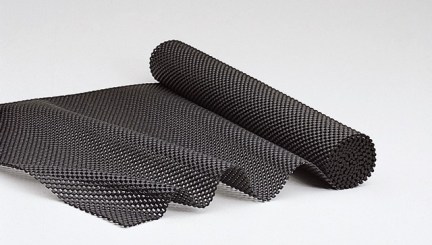
We have so much shelf liner in our house. It makes any seating area a sticky surface to help Ryan stay seated in place rather than slip and slide around in a chair due to his hypotonia. We used it more when he was smaller and had lower muscle tone/hypotonia and it was so helpful. We still keep a piece in our diaper bag so we can put it down on any high chair when we’re out in public, which helps keep him seated in place. Highly recommend this trick.

Our trusty piece of shelf liner that goes everywhere we do, cut to fit most restaurant high chair seats.
You can also put shelf liner under toys to help them stay in place while your child is playing with them, or under dishes on their high chair tray to help them stay put.
Black liner can also simply be used to provide a visually high contrast background to a toy or food plate.
 All About atr-x